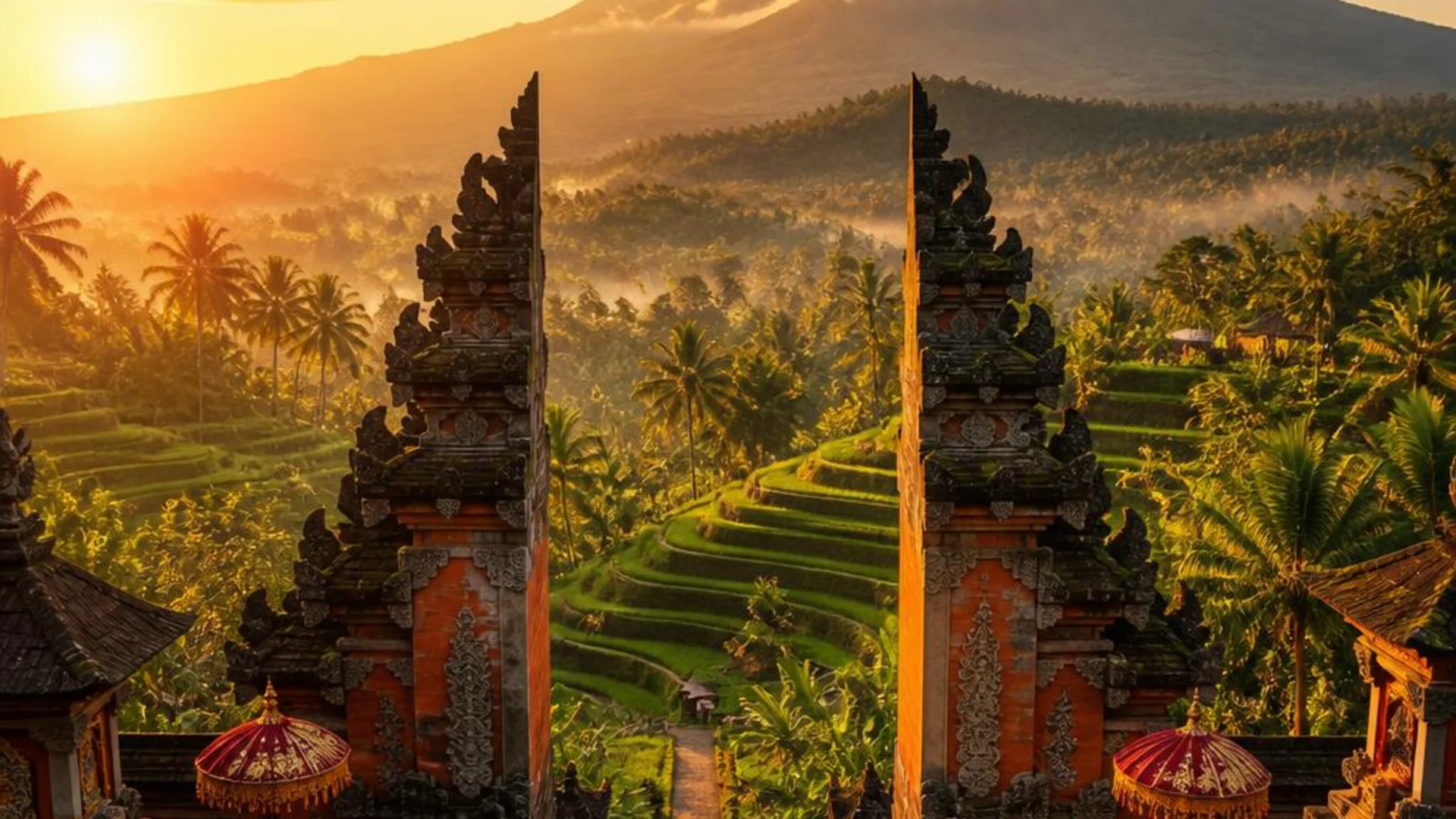

The feel
North Bali is the choice for travelers willing to trade convenience for space: black-sand beaches around Lovina, mountain roads, waterfalls, hot springs, lakes, temples, and villages with a slower rhythm. “North Bali” covers a large part of Buleleng, so Lovina, Singaraja, Munduk, and the mountain interior are not interchangeable bases.
What to do
- **Lovina coast:** Use the local North Bali portal to orient yourself, then ask a responsible local operator about current sea conditions and wildlife practices. Never treat a dolphin encounter as guaranteed or chase animals.
- **Waterfalls and springs:** Gitgit and other waterfall areas can involve wet, uneven paths, river crossings, and local contributions. Wear shoes with grip and do not enter after heavy rain without current local advice.
- **Mountains and lakes:** Munduk and the crater-lake landscapes reward a multi-night stay more than a rushed day trip. Fog and rain can change views and road conditions quickly.
- **Singaraja and villages:** Allow time for markets, food, and ordinary neighborhood life. Do not turn ceremonies or residents into a photo itinerary; ask first.
Planning and cost
Four to seven nights is a better fit than a single long excursion if you want more than Lovina. A private driver or experienced local guide is usually the practical choice for mountain roads and multiple trailheads; fixed journey times are intentionally omitted. Fuel, weather, and road works can change the day. Carry cash for small contributions where the current site requests it, but confirm the amount locally rather than relying on a stale blog.
Relative IDR planning shorthand only: $ = mostly local-cost stops, $ = a mix of local and visitor prices, $$ = premium/resort spend. It is not a quote or guarantee; confirm current prices with the linked provider. Village walks and many viewpoints may be $, guided waterfall or spring visits $, and multi-day drivers, diving, or higher-end mountain stays $$. These are broad IDR planning tiers, checked 2026-08-28; site contributions, operator packages, and seasonal availability must be confirmed.
Who it suits — and the trade-offs
North Bali suits repeat visitors, hikers, photographers, couples, and families comfortable with slower logistics. Pros: quieter roads in many areas, distinctive black-sand coast, cooler mountain pockets, and a stronger sense of landscape. Cons: longer transfers, fewer late-night services, slippery trails, weather disruption, and uneven accessibility. It is not the place to promise a quick checklist of every waterfall. Families should ask about trail length, water depth, life jackets, toilets, and supervision.
Nearby areas
Ubud can be paired with Munduk or the central highlands, but avoid stacking both into one rushed day. East Bali offers another slower landscape; Sanur is useful for a coast-to-coast transition. See Bali things to do and current North Bali listings when verified records are available.
Source and freshness note
Local and official source pages were checked on 2026-08-28. Trail conditions, waterfall access, contributions, sea state, wildlife behavior, weather, and road conditions are all changeable; check locally on the day.