
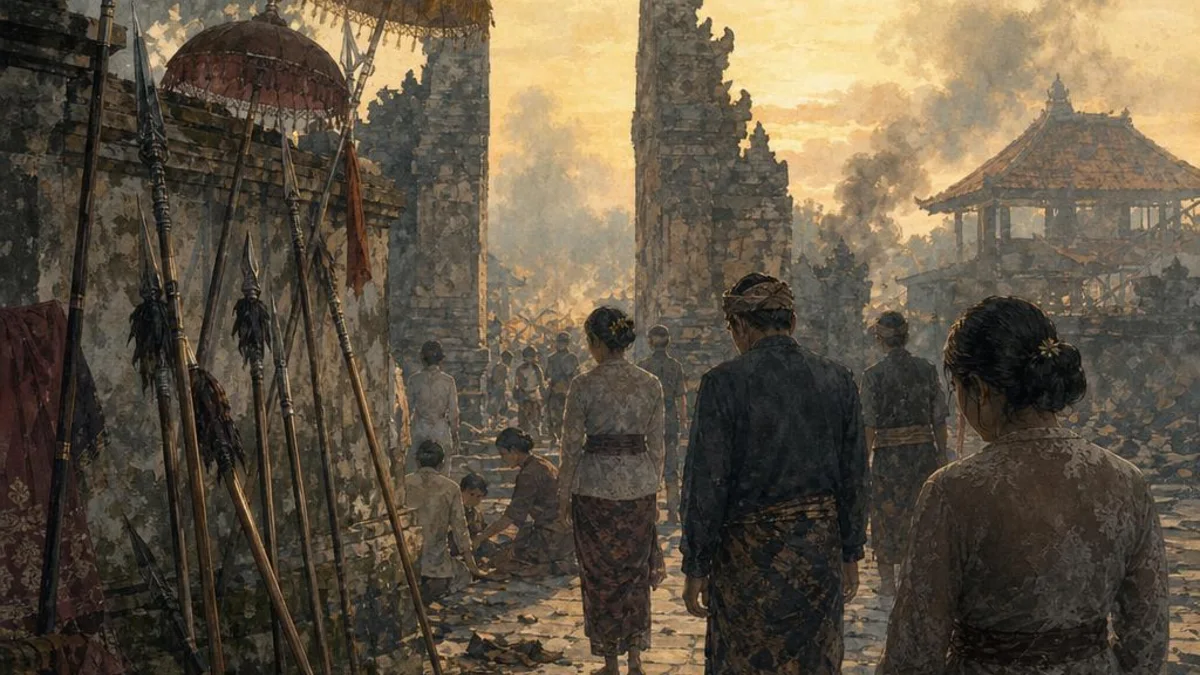
The Puputan of Badung and Klungkung
The violent end of independent courts in southern Bali · Colonial Encounters & Resistance
Puputan is commonly translated as a fight to the end. In 1906 and 1908, confrontations between Dutch troops and Balinese courts ended in mass deaths at Badung and Klungkung. The events became central to Balinese memory and exposed the violence behind the colonial image of a newly opened island paradise.
Timeline
Dutch forces invade Badung
A dispute following the wreck of a trading vessel was used to justify a Dutch expedition against Badung. Colonial troops advanced toward Denpasar after bombardment and fighting.
The Badung puputan
Members of the royal households and their followers emerged to face Dutch troops in a confrontation that ended in mass death. Accounts differ in detail, but the enormous loss of life is not disputed.

The Klungkung puputan
The court of Klungkung, the last major independent Balinese kingdom, resisted Dutch forces. The ruler and many followers died, completing direct colonial control over the island's kingdoms.
Explore related destinations
Use these destination guides to plan a respectful visit.
Related reading from our blog
- Nusa Dua, Bali: A three-day itinerary
Nusa Dua is a landscaped southern resort area with broad beaches, water-sports zones, cultural venues, and the neighboring Tanjung Benoa peninsula. This guide is specifically about a three-day itinerary: a calm, flexible sequence of mornings, afternoons, and evenings that leaves room for traffic, weather, and unplanned
- Nusa Dua, Bali: A first-time guide
Nusa Dua is a landscaped southern resort area with broad beaches, water-sports zones, cultural venues, and the neighboring Tanjung Benoa peninsula. This guide is specifically about a first-time guide: the personality of the area, the kinds of travelers it suits, and how to explore beyond its headline sights. The aim is
- Nusa Dua, Bali: When to visit
Nusa Dua is a landscaped southern resort area with broad beaches, water-sports zones, cultural venues, and the neighboring Tanjung Benoa peninsula. This guide is specifically about when to visit: weather rhythms, shoulder-season trade-offs, and how to plan around rain, surf, ceremonies, and daylight. The aim is not to
Sources
Citations behind the dates, names, and numbers on this page.
- 1Encyclopaedia Britannica — Bali
Summary of the Dutch conquest and puputan.
- 2Rijksmuseum — Bali expedition collection
Colonial-era visual records; images require critical reading in their historical context.