History of Bali

Explore a sourced history of Bali, from ancient inscriptions and subak to island kingdoms, puputan, independence, and living cultural heritage.

Bali History Timeline

  1. c. 2000 BCEEarly Bali and the Pejeng World · Origins & Early Bali
  2. 9th centurySubak and the Water-Temple Landscape · Kingdoms & Sacred Landscapes
  3. 882 CEAncient Bali in Stone and Copper · Origins & Early Bali
  4. 1343Majapahit, Gelgel, and the Balinese Courts · Kingdoms & Sacred Landscapes
  5. 1597Trade and Dutch Expansion in Bali · Colonial Encounters & Resistance
  6. September 1906The Puputan of Badung and Klungkung · Colonial Encounters & Resistance
  7. 1920s–1930sTourism and Cultural Stewardship · Independence & Living Heritage
  8. 1942–1945Independence and the Battle of Margarana · Independence & Living Heritage

Origins & Early Bali

Archaeology and inscriptions reveal communities adapting to volcanic land, maritime exchange, metalworking, worship, and organized authority long before Bali's best-known courts.

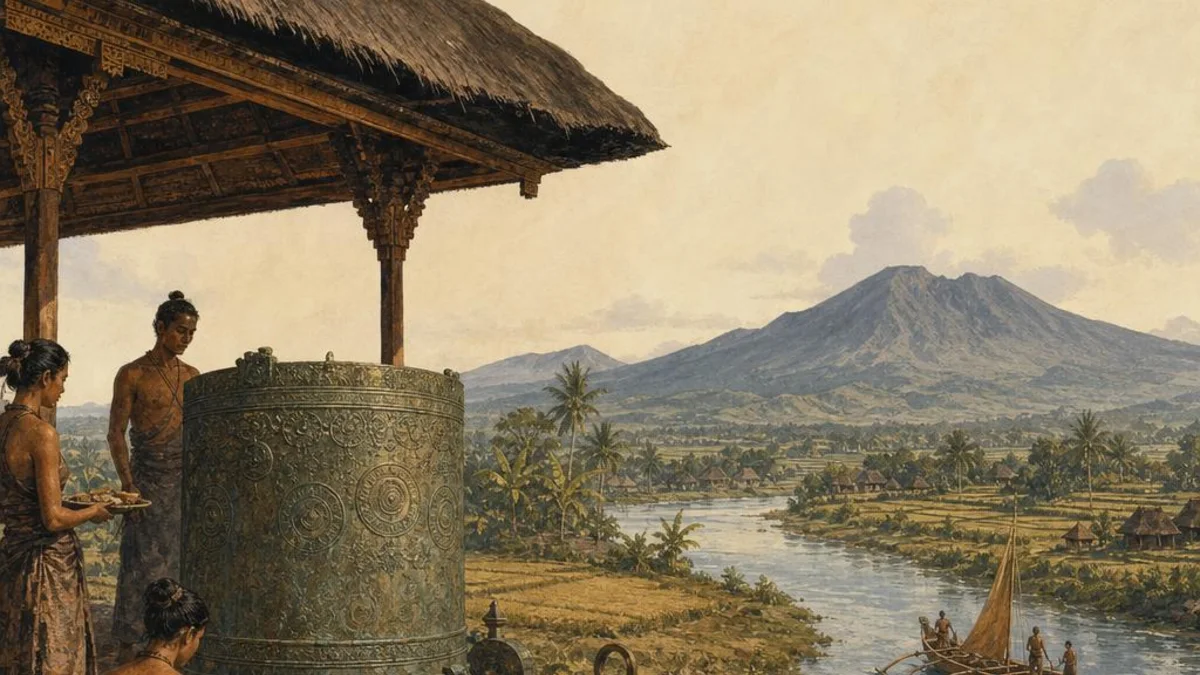
  • Original editorial illustration of the Moon of Pejeng-style bronze drum in a sacred pavilion above an early Bali river valley
    Early Bali and the Pejeng World
    From prehistoric settlement to the island's Bronze Age
    c. 2000 BCE — First millennium CE
    • c. 2000 BCE Austronesian communities settle Bali
    • c. 500 BCE–200 CE Bronze technology and regional exchange
    Original generated editorial illustration by BaliTravel.app, 2026; researched from the Met's Dong Son drum catalogue
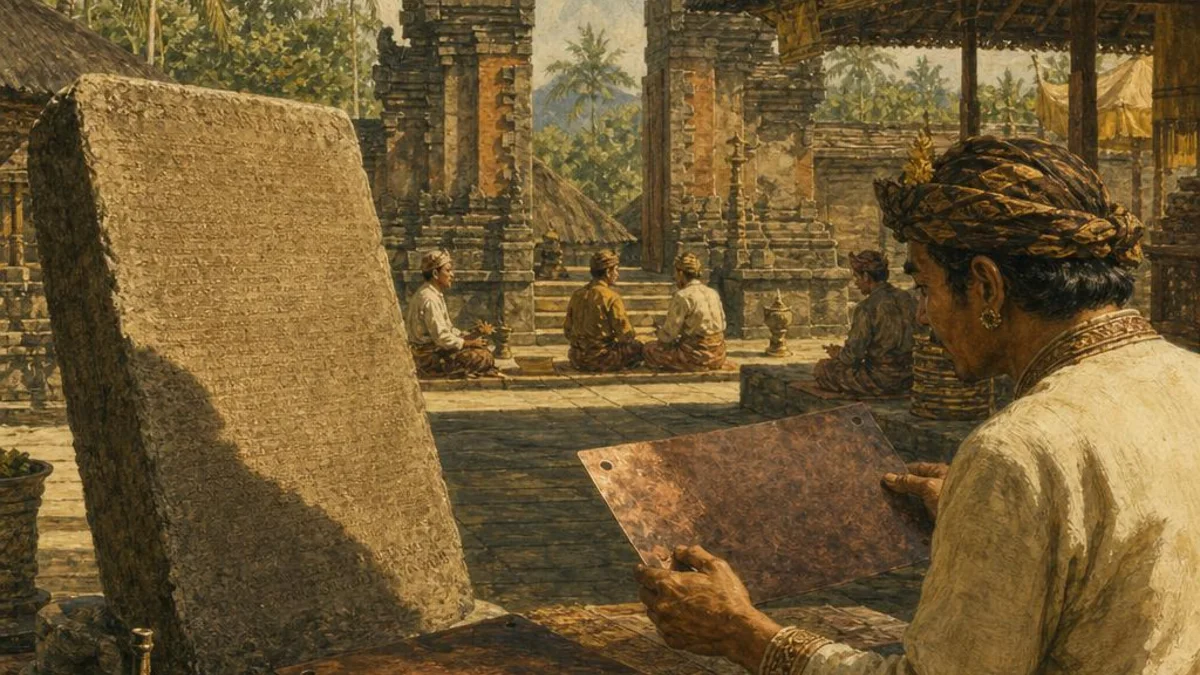
  • Original editorial illustration of an ancient Balinese stone inscription, copper charter plates, and temple gateway
    Ancient Bali in Stone and Copper
    Inscriptions reveal courts, villages, and religious life
    882 CE — 11th century
    • 882 CE The earliest dated Balinese inscriptions
    • 914 CE Warmadewa authority appears
    Original generated editorial illustration by BaliTravel.app, 2026; researched from Britannica and UNESCO references

Kingdoms & Sacred Landscapes

Connections with Java, competing island courts, temples, and farmer-managed irrigation shaped a cultural landscape in which political change and ritual continuity existed together.

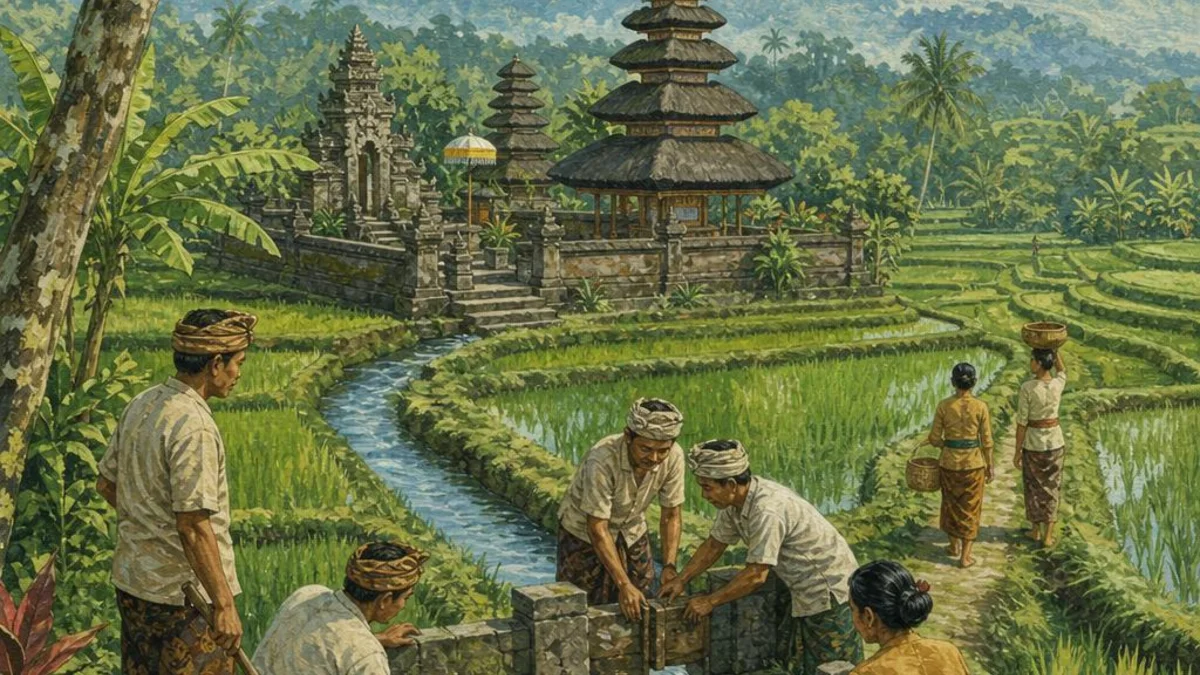
  • Original editorial illustration of Balinese farmers coordinating water through rice terraces, channels, and a water temple
    Subak and the Water-Temple Landscape
    Cooperative irrigation shaped Bali's fields and communities
    9th century — 2012
    • 9th century Early evidence of irrigated rice cultivation
    • 11th century Irrigation communities become established
    Original generated editorial illustration by BaliTravel.app, 2026; researched from UNESCO World Heritage documentation
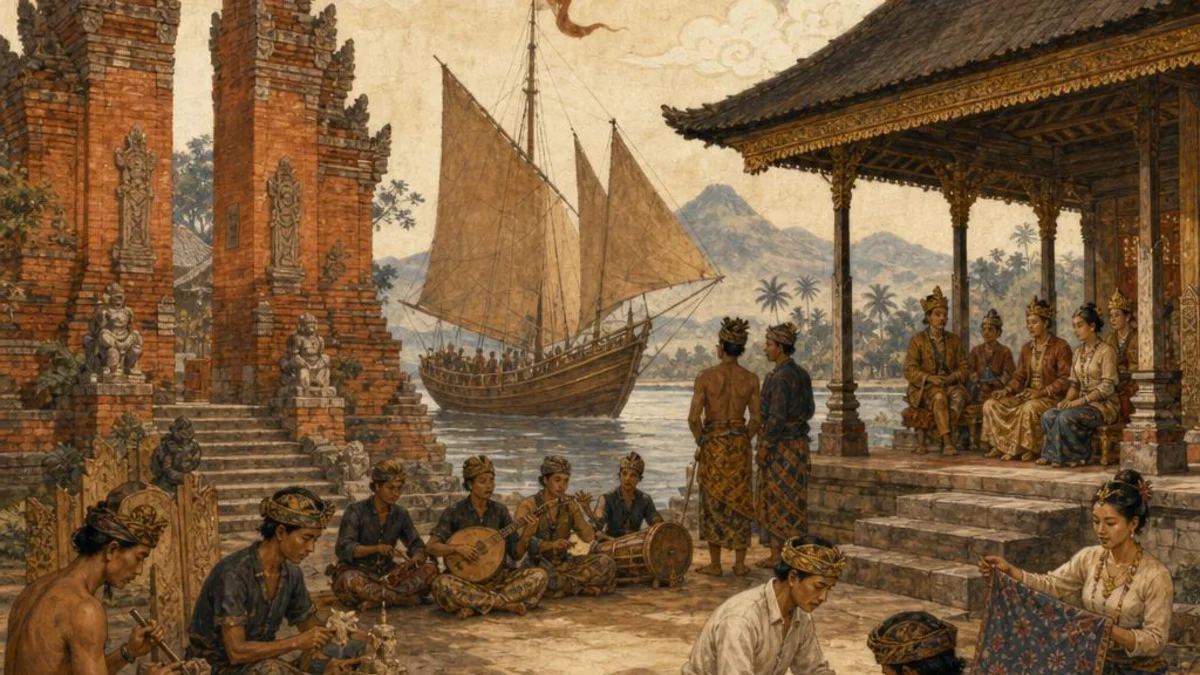
  • Original editorial illustration of a Java–Bali sailing connection, red-brick gate, and Balinese court pavilion
    Majapahit, Gelgel, and the Balinese Courts
    Javanese ties and island kingdoms reshape political Bali
    1343 — Late 17th century
    • 1343 Majapahit forces conquer Bali
    • 16th century Gelgel becomes Bali's leading court
    Original generated editorial illustration by BaliTravel.app, 2026; researched from Britannica's Bali and Majapahit histories

Colonial Encounters & Resistance

European contact became conquest only after centuries of trade, treaty pressure, and military campaigns, ending in the mass deaths of 1906 and 1908 and direct Dutch control.

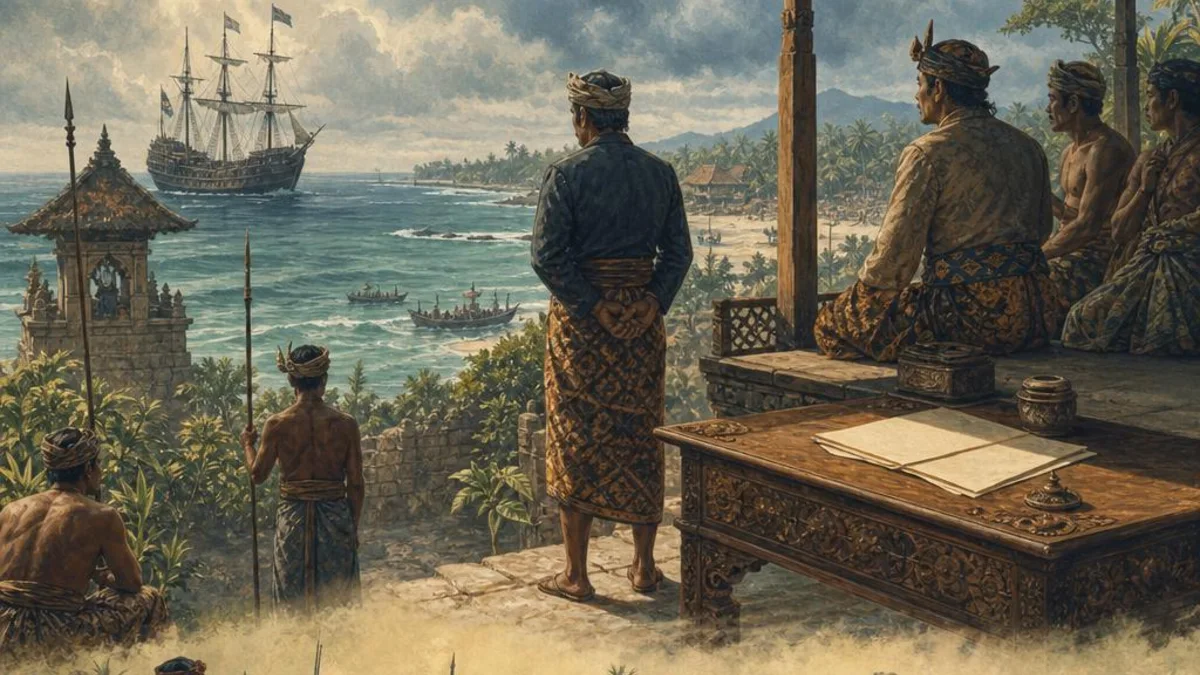
  • Original editorial illustration of a Dutch sailing ship offshore, a Balinese coastal watch point, and a blank treaty paper
    Trade and Dutch Expansion in Bali
    From first European contact to colonial campaigns
    1597 — 1894
    • 1597 The first Dutch expedition visits Bali
    • 1846–1849 Dutch campaigns in northern Bali
    Original generated editorial illustration by BaliTravel.app, 2026; researched from Britannica's history of Bali
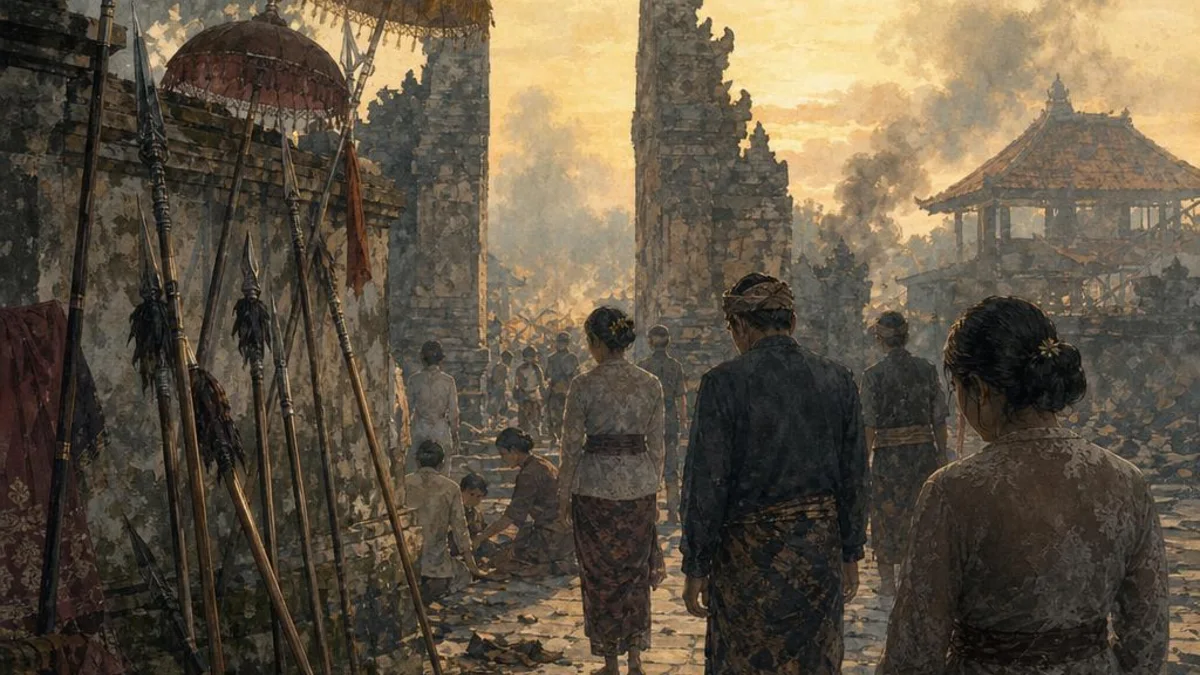
  • Original editorial illustration of a solemn palace aftermath with ceremonial parasols, temple gate, and civilians after the puputan
    The Puputan of Badung and Klungkung
    The violent end of independent courts in southern Bali
    September 1906 — 28 April 1908
    • September 1906 Dutch forces invade Badung
    • 20 September 1906 The Badung puputan
    Original generated editorial illustration by BaliTravel.app, 2026; researched from Britannica and the Rijksmuseum Bali expedition collection

Independence & Living Heritage

Occupation, revolution, independence, tourism, and cultural stewardship show modern Bali as a place whose communities continue to negotiate change rather than preserve a frozen past.

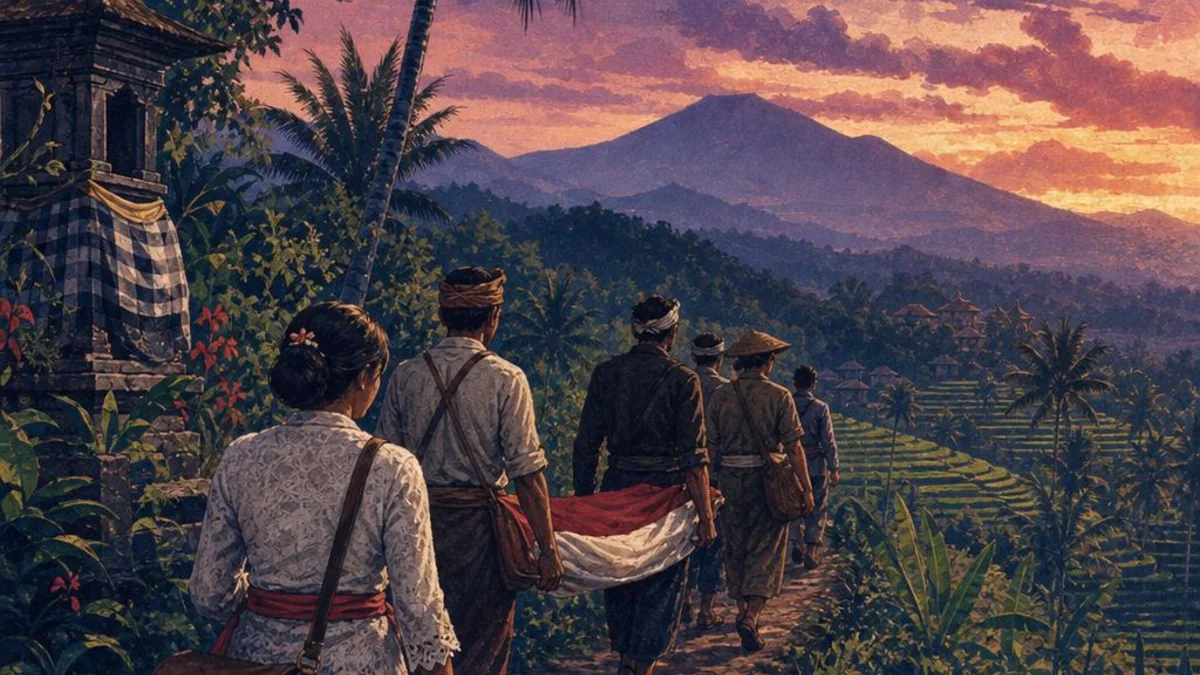
  • Original editorial illustration of independence-era community figures carrying a red-and-white cloth along a Balinese hillside
    Independence and the Battle of Margarana
    Bali in Indonesia's revolution and republic
    1942–1945 — 1949–1950
    • 1942–1945 Japanese occupation
    • 17 August 1945 Indonesia proclaims independence
    Original generated editorial illustration by BaliTravel.app, 2026; researched from Indonesia independence references
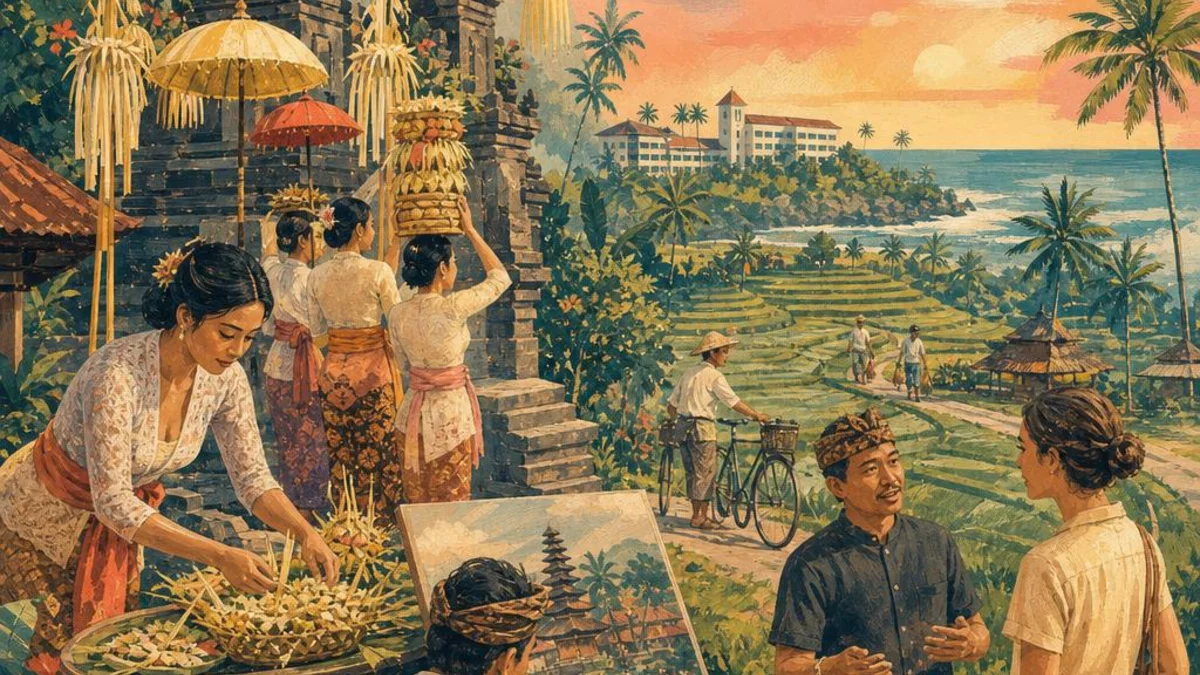
  • Original editorial illustration of Balinese cultural stewardship, a painter, local guide, visitor, rice terraces, and early hotel coast
    Tourism and Cultural Stewardship
    A century of visitors, opportunity, pressure, and adaptation
    1920s–1930s — 21st century
    • 1920s–1930s Bali enters international travel culture
    • 1963–1969 Modern tourism infrastructure expands
    Original generated editorial illustration by BaliTravel.app, 2026; researched from UNESCO, World Bank, and Britannica references