
Early Bali and the Pejeng World
From prehistoric settlement to the island's Bronze Age · Origins & Early Bali
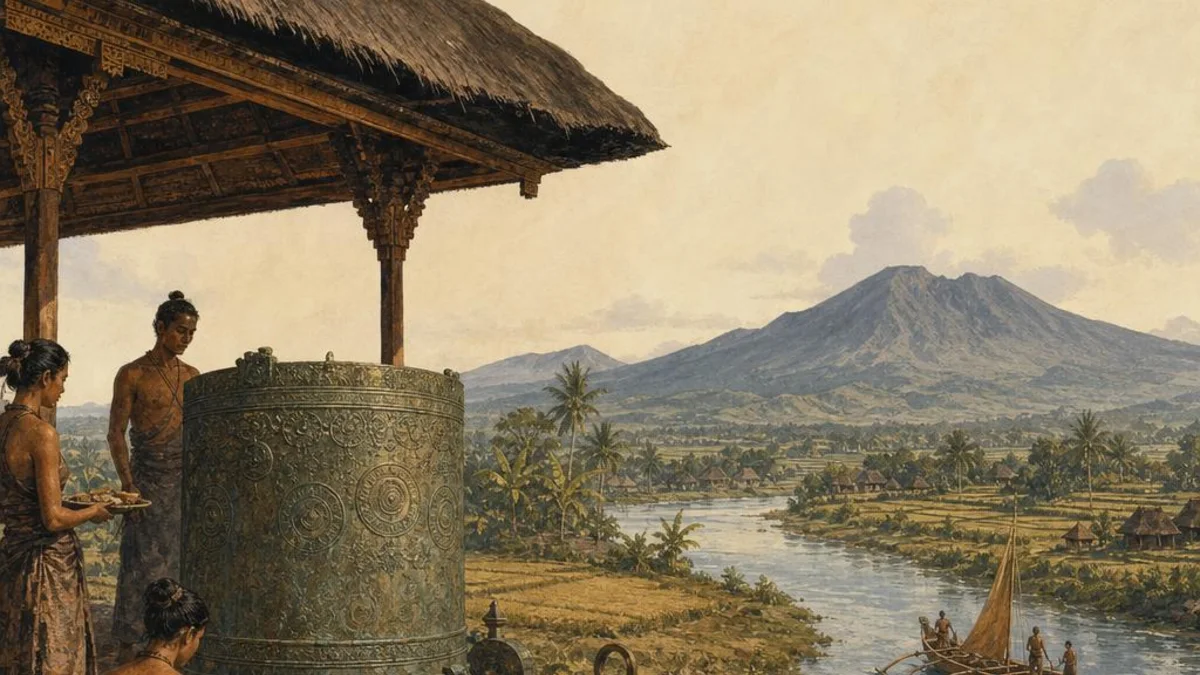
Bali's history begins long before written chronicles. Archaeological sites show successive communities adapting to the island's volcanic soils and coastal resources. By the first millennium BCE, metalworking connected Bali to wider exchange networks. The enormous bronze drum known as the Moon of Pejeng remains the best-known object from this early world.
Timeline
Austronesian communities settle Bali
Farming and seafaring communities speaking Austronesian languages reached the Indonesian archipelago over many centuries. Archaeological evidence places Bali within this broad movement of people, crops, tools, and maritime knowledge.
Bronze technology and regional exchange
Bronze drums and other prestige objects associated with the Dong Son tradition reached islands across Southeast Asia. Bali's finds show that the island participated in long-distance exchange well before its earliest inscriptions.
The Moon of Pejeng enters Bali's sacred landscape
The exceptionally large bronze drum preserved at Pura Penataran Sasih near Pejeng became part of local sacred tradition. Its precise date and place of manufacture remain debated, so it is best understood as evidence of Bali's early regional connections rather than a single dated event.

Explore related destinations
Use these destination guides to plan a respectful visit.
Sources
Citations behind the dates, names, and numbers on this page.
- 1Encyclopaedia Britannica — Bali
Overview of Bali's geography, population, and early historical setting.
- 2The Metropolitan Museum of Art — Dong Son drums
Museum context for the wider Southeast Asian bronze-drum tradition.